
Understanding how the law protects individuals from threats and provocative insults is essential in today’s fast-moving world. Under the Bharatiya Nyaya Sanhita 2023, Sections 351 and 352 introduce clearer rules to address criminal intimidation and intentional insults that may disrupt public peace. These provisions strengthen legal protection from harassment and outline consequences for threats made verbally, in writing, or through digital platforms.
Whether it’s a harm to property threat, a threat to reputation offence, or provoking public disturbance through abusive language, these sections aim to deter harmful conduct. Let’s break down what these laws mean for you and how they function in real-life situations.
Related post: Understanding Section 109 Attempt to Murder of the Bharatiya Nyaya Sanhita (BNS): Explained
Section 351 : Criminal intimidation.
Section 351 defines criminal intimidation as threatening someone with injury to their person, property, or reputation to cause alarm or force them to act against their legal rights. The provision under BNS Section 351 covers threats delivered through speech, writing, or intimidation through electronic communication. For example, sending threatening messages demanding money or warning someone to drop a lawsuit falls under criminal intimidation law.
This section also includes threats directed at someone’s loved ones or even deceased relatives if the aim is to cause emotional distress. Such conduct creates fear and undermines personal security, which is why the law treats it as a serious offence against person and property.
Explanation of Section 351 : Criminal intimidation.
The legal definition of intimidation focuses on intent. The accused must intend to cause alarm or compel the victim to do something they are not legally bound to do. For instance, threatening to leak private information unless someone complies with demands demonstrates clear legal intent and provocation.
Importantly, anonymous criminal threats attract stricter scrutiny. If a person conceals their identity while issuing threats, the anonymous threat punishment can increase. This ensures accountability even in cases involving fake profiles or untraceable communications.
Ingredients of Section 351 : Criminal intimidation.
To prove a criminal intimidation offence, the following elements must exist:
- Threat: A clear warning of harm to reputation, property, or personal safety
- Intent: Purpose to cause fear or force unlawful compliance
- Means: Verbal, written, or digital communication
- Impact: Victim feels compelled to act to avoid harm
These ingredients help courts determine criminal liability for threats and ensure that only genuine breach of peace offences are prosecuted.
Punishment for Section 351 : Criminal intimidation.
Punishment varies depending on severity. Basic intimidation may lead to imprisonment, a fine, or both. However, aggravated criminal intimidation involving a threat to cause grievous hurt, death, or destruction by fire can result in imprisonment up to 7 years.
If threats are anonymous, additional penalties may apply. The law also distinguishes between bailable vs non-bailable offences, with serious threats often treated as cognizable criminal offences triable by a magistrate.
Section 352: Intentional insult with intent to provoke breach of peace.
Section 352 addresses intentional insult law where a person deliberately provokes another, knowing it may lead to a public peace violation. Under BNS Section 352, insults that incite violence or provoke retaliation fall within this provision.
For example, publicly humiliating someone using abusive language to trigger a fight may qualify as provoking public disturbance. The law aims to prevent escalation from verbal abuse to physical conflict.
Explanation of Section 352: Intentional Insult to Provoke Breach of Peace BNS
This section focuses on the likelihood of the insult causing a breach of peace offence. The offender must either intend or know that their words or actions could provoke violence or unlawful behavior. This distinguishes casual disagreements from punishable acts.
In fact, the law recognizes that repeated harassment or offensive remarks can create volatile situations. By addressing such conduct early, the public peace disturbance law helps maintain social harmony.
Ingredients of Section 352: Intentional Insult to Provoke Breach of Peace BNS
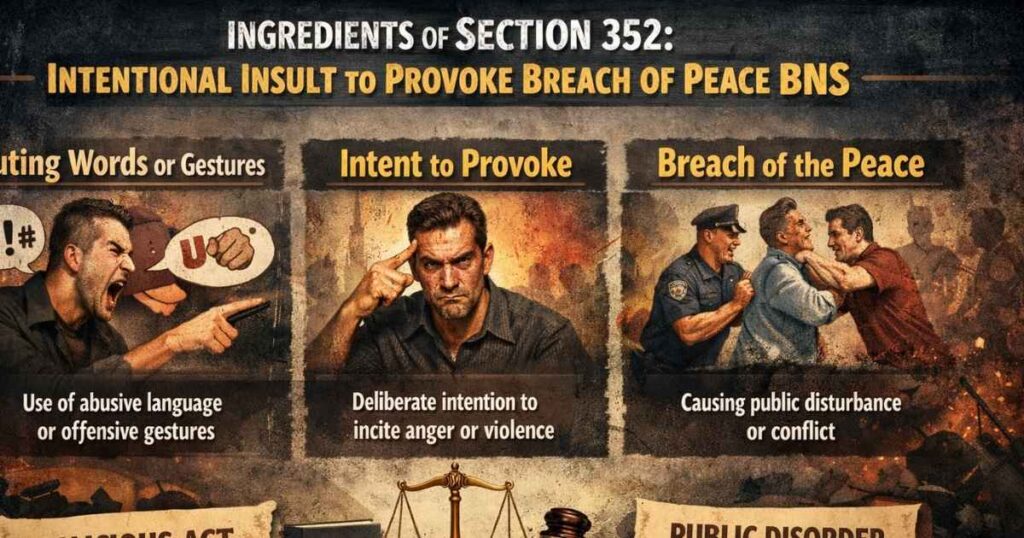
To establish this offence, the following must be proven:
- Intentional insult delivered verbally, physically, or online
- Knowledge that the insult could provoke violence
- Likelihood of disturbing public peace or causing an offence
These elements ensure that minor disputes do not become criminal matters unless they pose real risks to public order.
FAQs
What is criminal intimidation under BNS Section 351?
It involves threatening someone with harm to cause fear or force them to act against their legal rights.
What punishment applies for aggravated criminal intimidation?
Serious threats, such as death or grievous harm, may lead to imprisonment up to 7 years.
Is intentional insult under Section 352 a bailable offence?
Yes, it is generally bailable unless linked to more serious offences.
What is the difference between Sections 351 and 352?
Section 351 deals with threats while Section 352 addresses insults intended to provoke a breach of peace.
Can anonymous threats lead to extra punishment?
Yes, concealing identity while issuing threats can result in additional penalties.
Conclusion
Sections 351 and 352 of the BNS Sec.351,352: New Criminal intimidation and insult to provoke breach of peace framework provide vital safeguards against threats and provocative insults. By defining criminal intimidation law and intentional insult law clearly, these provisions help prevent conflicts before they escalate into violence.
Understanding these rules empowers you to recognize unlawful behavior and seek legal remedies when necessary. In a society where digital communication is widespread, these protections play a crucial role in maintaining safety, dignity, and public order.

Daniel Cross is a legal researcher and freelance writer specializing in civil rights, policy analysis, and contemporary legal trends. With a strong background in academic writing and practical case review, he focuses on making complex legal concepts accessible to everyday readers while promoting clarity, fairness, and informed public discourse.